
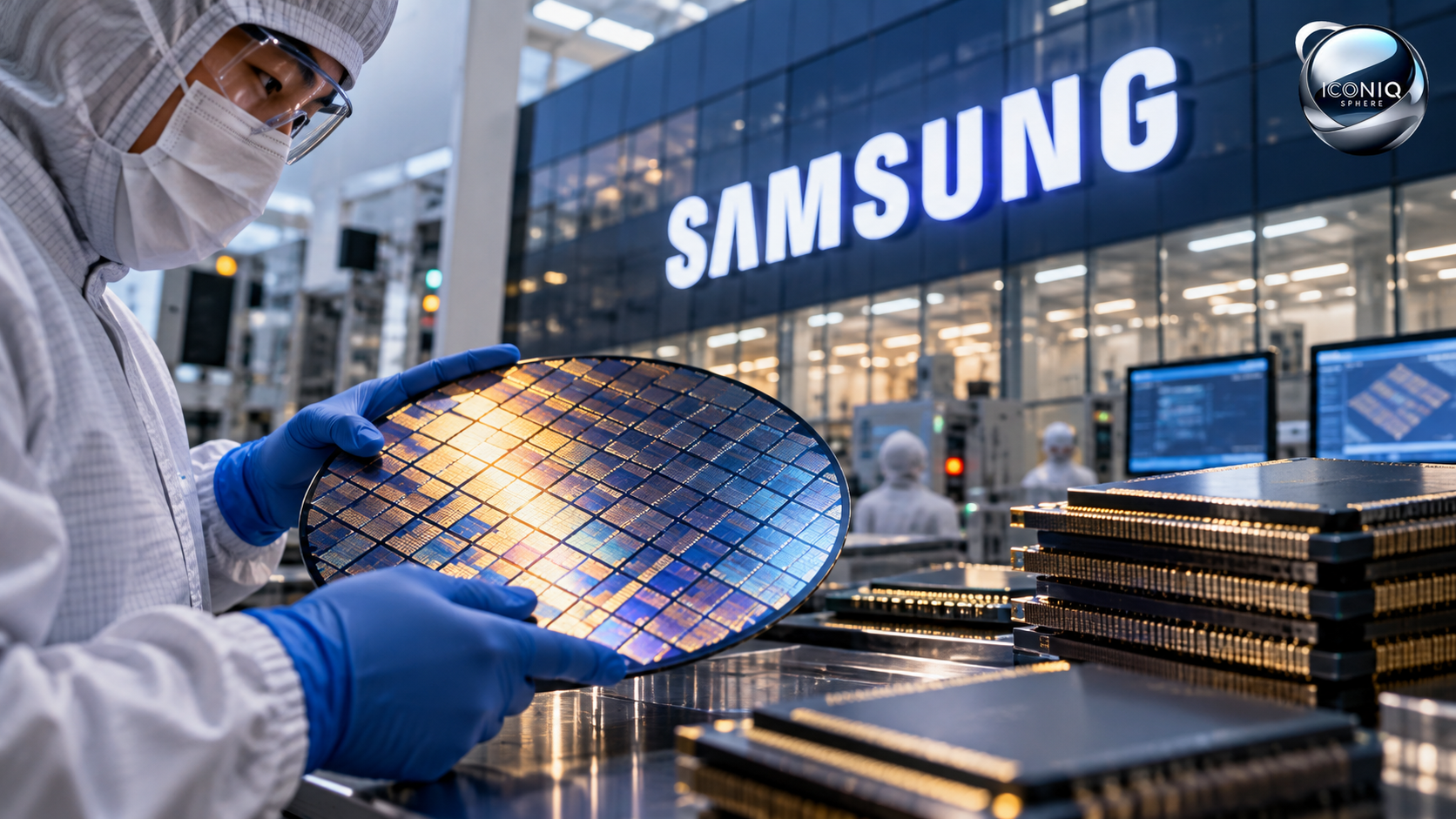
Samsung Electronics has forecast an extraordinary third-quarter operating profit of 107.4 trillion won, approximately $80 billion, as soaring demand for AI memory chips reshapes the semiconductor industry.
Announced on October 8, 2026, the preliminary figure represents a 782.5% increase from a year earlier. Samsung also projected revenue of 195 trillion won. Final results are expected on October 29.
The forecast highlights how the AI boom is rewarding companies that supply the infrastructure behind powerful computing systems.
Why Memory Matters
AI data centres depend on more than advanced processors. They also require high-speed memory capable of moving enormous volumes of information quickly. High-bandwidth memory, or HBM, has therefore become central to the expanding AI hardware market, alongside conventional DRAM and NAND products.
Samsung faces intense competition from SK Hynix and Micron in memory, while Nvidia and TSMC occupy other crucial parts of the semiconductor ecosystem. Manufacturing capacity, reliable supply and technological advances will shape the next phase of competition.
Winners, Costs and Risks
Rising memory prices can lift semiconductor manufacturers' profits while increasing costs for smartphone makers, computer manufacturers and enterprise technology buyers. Samsung's own consumer electronics operations may face these pressures.
The strength of the boom also raises questions about sustainability. Research firm TrendForce, cited by Reuters, expects conventional DRAM contract prices to rise 10% to 15% in the fourth quarter, a slower pace than earlier in 2026.
For business leaders, the message extends beyond a single earnings forecast. AI infrastructure is becoming a strategic investment, but concentrated supply chains, volatile component costs and uncertain returns demand careful planning.
Companies will need to diversify suppliers, strengthen procurement strategies and evaluate whether their AI spending creates lasting commercial value.
That matters especially as cloud providers race to rapidly expand computing capacity worldwide.
What Comes Next
Samsung's detailed earnings report should clarify which divisions drove the projected gains and how the company views future demand.
For now, its preliminary forecast illustrates the extraordinary economics of the AI infrastructure boom. Whether these profits signal lasting strength or a peak in the chip cycle remains uncertain.———————————————————————————————————————————————————————————————— Sources and reporting:
• Samsung Electronics Official Q3 2026 Earnings Guidance, October 8, 2026
• Reuters Samsung Flags $80 Billion Profit on AI Boom, October 8, 2026
• Yonhap News Agency Samsung's Q3 Operating Profit Reaches New High, October 8, 2026
Editorial note: All financial figures attributed to Samsung's third-quarter 2026 announcement are preliminary estimates. Final results may differ.